Deprecated: Creation of dynamic property GD_SEV_Plugin::$__FILE__ is deprecated in /var/www/wp-content/plugins/search-engine-visibility/classes/plugin.php on line 19

Deprecated: Return type of WPGMZA\CustomFeatureFields::getIterator() should either be compatible with IteratorAggregate::getIterator(): Traversable, or the #[\ReturnTypeWillChange] attribute should be used to temporarily suppress the notice in /var/www/wp-content/plugins/wp-google-maps-pro/includes/custom-fields/class.custom-map-object-fields.php on line 120

Deprecated: Return type of WPGMZA\CustomFeatureFields::jsonSerialize() should either be compatible with JsonSerializable::jsonSerialize(): mixed, or the #[\ReturnTypeWillChange] attribute should be used to temporarily suppress the notice in /var/www/wp-content/plugins/wp-google-maps-pro/includes/custom-fields/class.custom-map-object-fields.php on line 129

Deprecated: Return type of WPGMZA\CustomFeatureFields::count() should either be compatible with Countable::count(): int, or the #[\ReturnTypeWillChange] attribute should be used to temporarily suppress the notice in /var/www/wp-content/plugins/wp-google-maps-pro/includes/custom-fields/class.custom-map-object-fields.php on line 111

Deprecated: Return type of WPGMZA\CustomFields::getIterator() should either be compatible with IteratorAggregate::getIterator(): Traversable, or the #[\ReturnTypeWillChange] attribute should be used to temporarily suppress the notice in /var/www/wp-content/plugins/wp-google-maps-pro/includes/custom-fields/class.custom-fields.php on line 121

Deprecated: Return type of WPGMZA\CustomFields::jsonSerialize() should either be compatible with JsonSerializable::jsonSerialize(): mixed, or the #[\ReturnTypeWillChange] attribute should be used to temporarily suppress the notice in /var/www/wp-content/plugins/wp-google-maps-pro/includes/custom-fields/class.custom-fields.php on line 130

Deprecated: Return type of WPGMZA\CustomFields::count() should either be compatible with Countable::count(): int, or the #[\ReturnTypeWillChange] attribute should be used to temporarily suppress the notice in /var/www/wp-content/plugins/wp-google-maps-pro/includes/custom-fields/class.custom-fields.php on line 136

Deprecated: Creation of dynamic property WPGMZA\ProDatabase::$version is deprecated in /var/www/wp-content/plugins/wp-google-maps-pro/includes/class.pro-database.php on line 12

Deprecated: Creation of dynamic property WPGMZA\ProDatabase::$charset_collate is deprecated in /var/www/wp-content/plugins/wp-google-maps-pro/includes/class.pro-database.php on line 13
USGS Releases Unified Geological Map of the Moon -

USGS Releases Unified Geological Map of the Moon

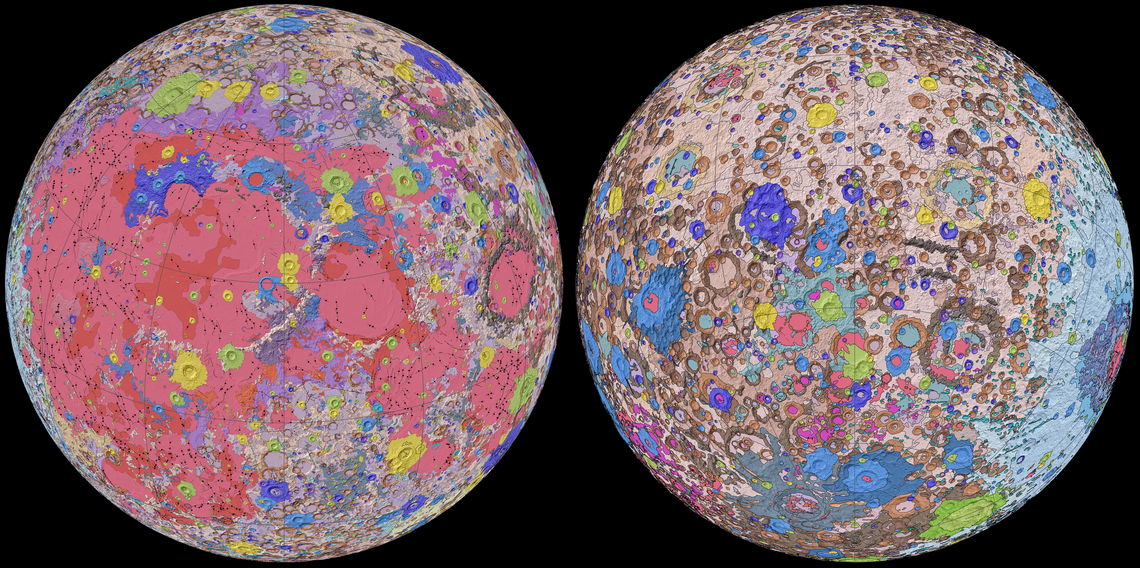
Orthographic projections of the "Unified Geologic Map of the Moon" showing the geology of the Moon’s near side (left) and far side (right) with shaded topography from the Lunar Orbiter Laser Altimeter (LOLA). This geologic map is a synthesis of six Apollo-era regional geologic maps, updated based on data from recent satellite missions. It will serve as a reference for lunar science and future human missions to the Moon. Credit: NASA/GSFC/USGS.

The USGS Astrogeology Science Center, in collaboration with NASA and the Lunar Planetary Institute has mapped the entire lunar surface. Called the “Unified Geologic Map of the Moon,” the project serves as the definitive survey of the moon’s surface geology for future human missions and will be invaluable for the scientific community, educators, and the general public. The digital map is available online now and shows the moon’s geology in incredible detail (1:5,000,000 scale).

“People have always been fascinated by the moon and when we might return,” said current USGS Director and former NASA astronaut Jim Reilly. “So, it’s wonderful to see USGS create a resource that can help NASA with their planning for future missions.”

This animation shows a rotating globe of the new Unified Geologic Map of the Moon with shaded topography from the Lunar Orbiter Laser Altimeter (LOLA). This geologic map is a synthesis of six Apollo-era regional geologic maps, updated based on data from recent satellite missions. It will serve as a reference for lunar science and future human missions to the Moon. Credit: NASA/GSFC/USGS

For more details about the map, read the abstract or download it directly at the Unified Geologic Map of the Moon website.

USGS provides science for a changing world. For more information, visit www.usgs.gov.

Subscribe to USGS News Releases via our electronic mailing list or RSS feed.

Social Media Auto Publish Powered By : XYZScripts.com
Share via
Copy link
Powered by Social Snap